Gypsum Plastering and Wall Levelling
The truth beneath the paint: the flatter the wall, the kinder the light — Istanbul-standard gypsum plaster builds that flatness.
- Laser-Set Screed Rail System
- Machine Plaster: Uniform, Seamless Surface
- Corner Beads & Mesh Reinforcement As Standard
- Contractual Workmanship Warranty
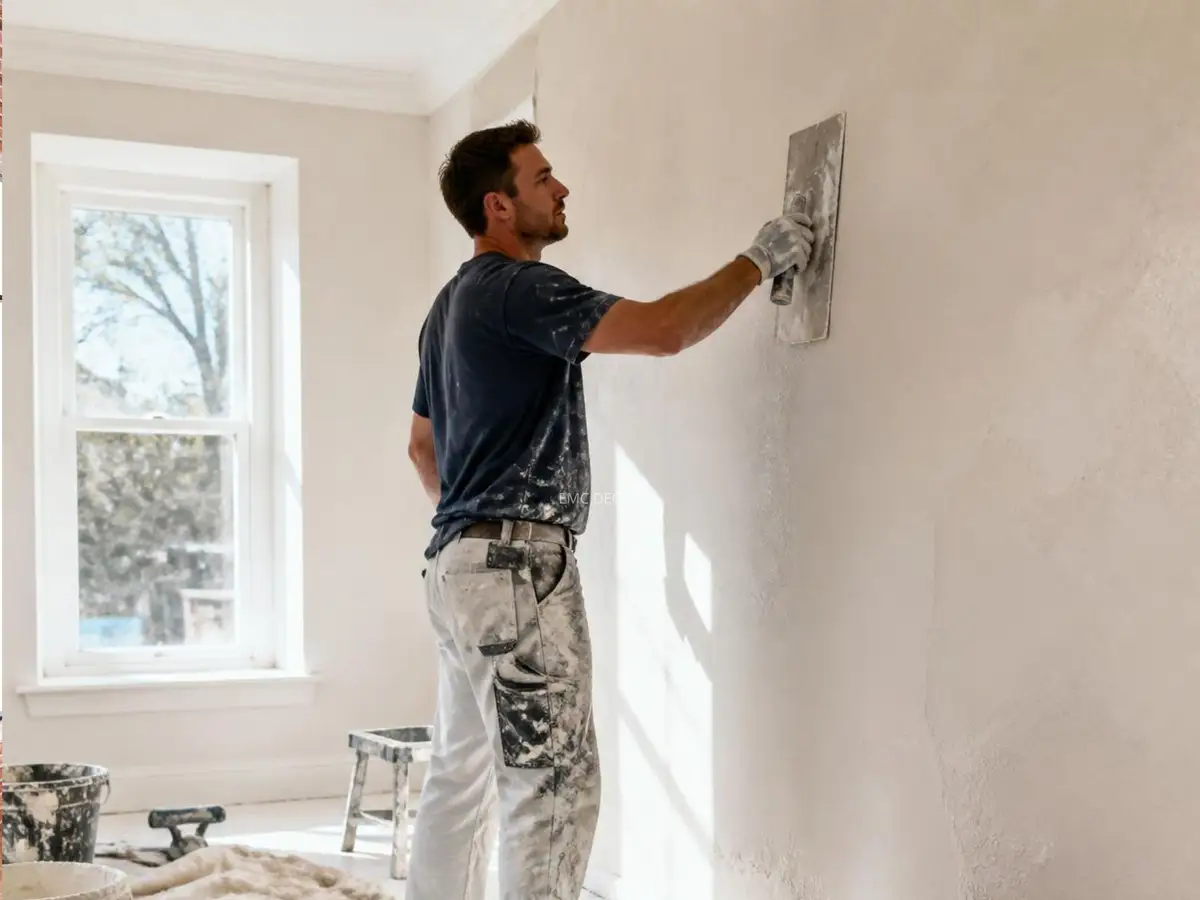
Gypsum plaster is the standard carrier surface of interior walls and ceilings: applied over brick, AAC block or raw concrete, it prepares the ground for paint and decorative coats that forgive nothing under raking light. At EMC Decor, application starts with screed rails: set by laser, they control coat thickness at every point, and every surface is verified against the straightedge.
We prefer machine application: the mix is uniform, pumped onto the wall, and large surfaces are covered seamlessly in one pass. Corner beads at door and window reveals, and mesh reinforcement at material junctions (concrete-to-brick, drywall-to-masonry) are standard — cracks start at these transitions, so we reinforce them from the outset.
Why EMC Decor
Laser-set rail system: straightedge-verified flat surfaces
Machine plastering: uniform mix, seamless large surfaces
Corner beads and mesh reinforcement as standard — cracks prevented
Fast drying: satin- and paint-ready in 3–7 days
The Challenges You Face, Our Fix
RISK 01: Hand-troweled walls that ripple and fail the straightedge test
SOLUTION: Laser-set rails keep coat thickness identical at every point; every stage is checked with the straightedge.
RISK 02: Cracks opening up at concrete-to-brick or drywall-to-masonry junctions
SOLUTION: We reinforce material transitions with suitable mesh and joint detailing to reduce the risk of junction cracks.
RISK 03: Plastering AAC block without primer causes the coat to 'burn' and flake
SOLUTION: A primer chosen by absorbency test balances the moisture, letting the coat cure properly.
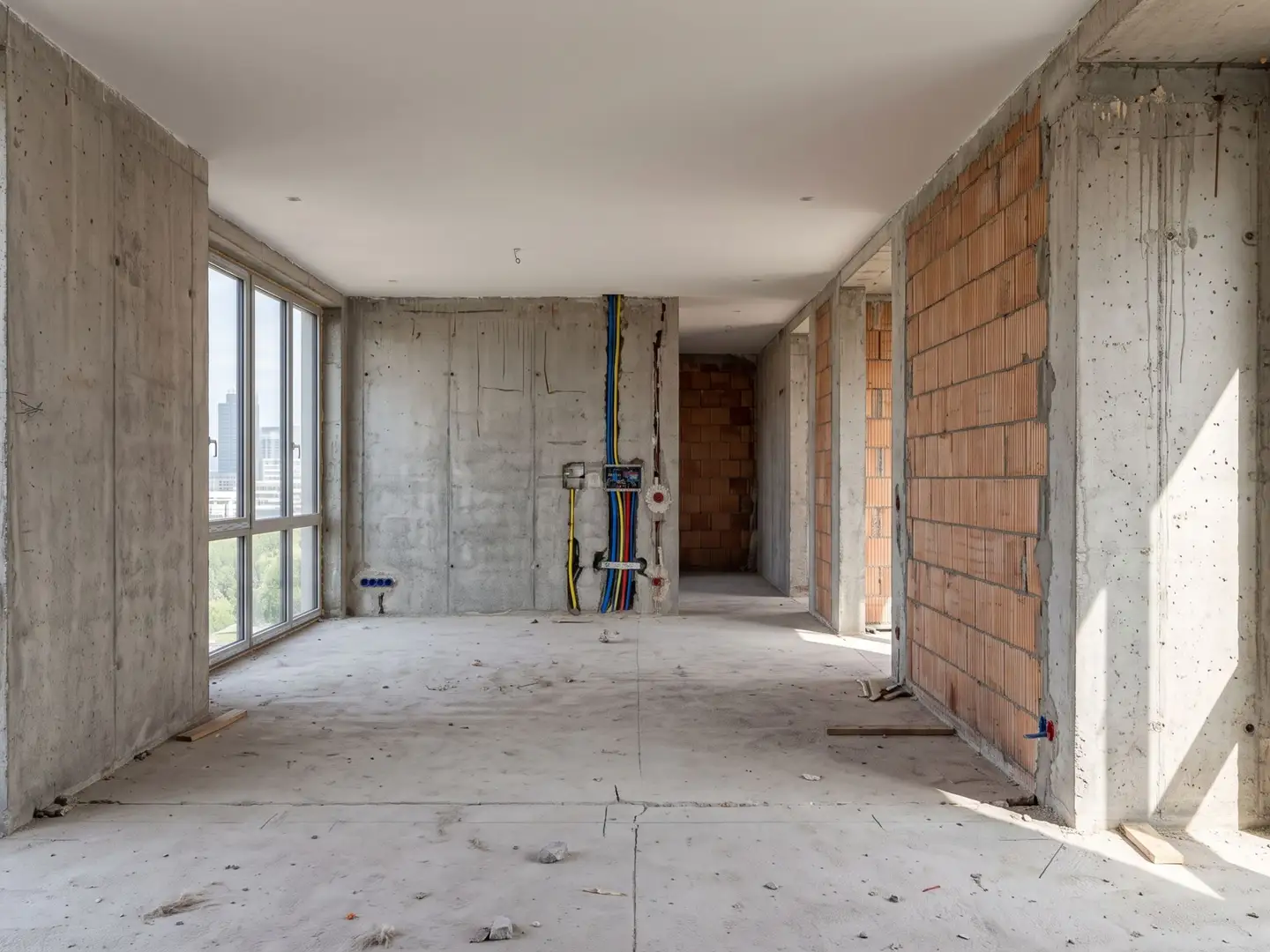
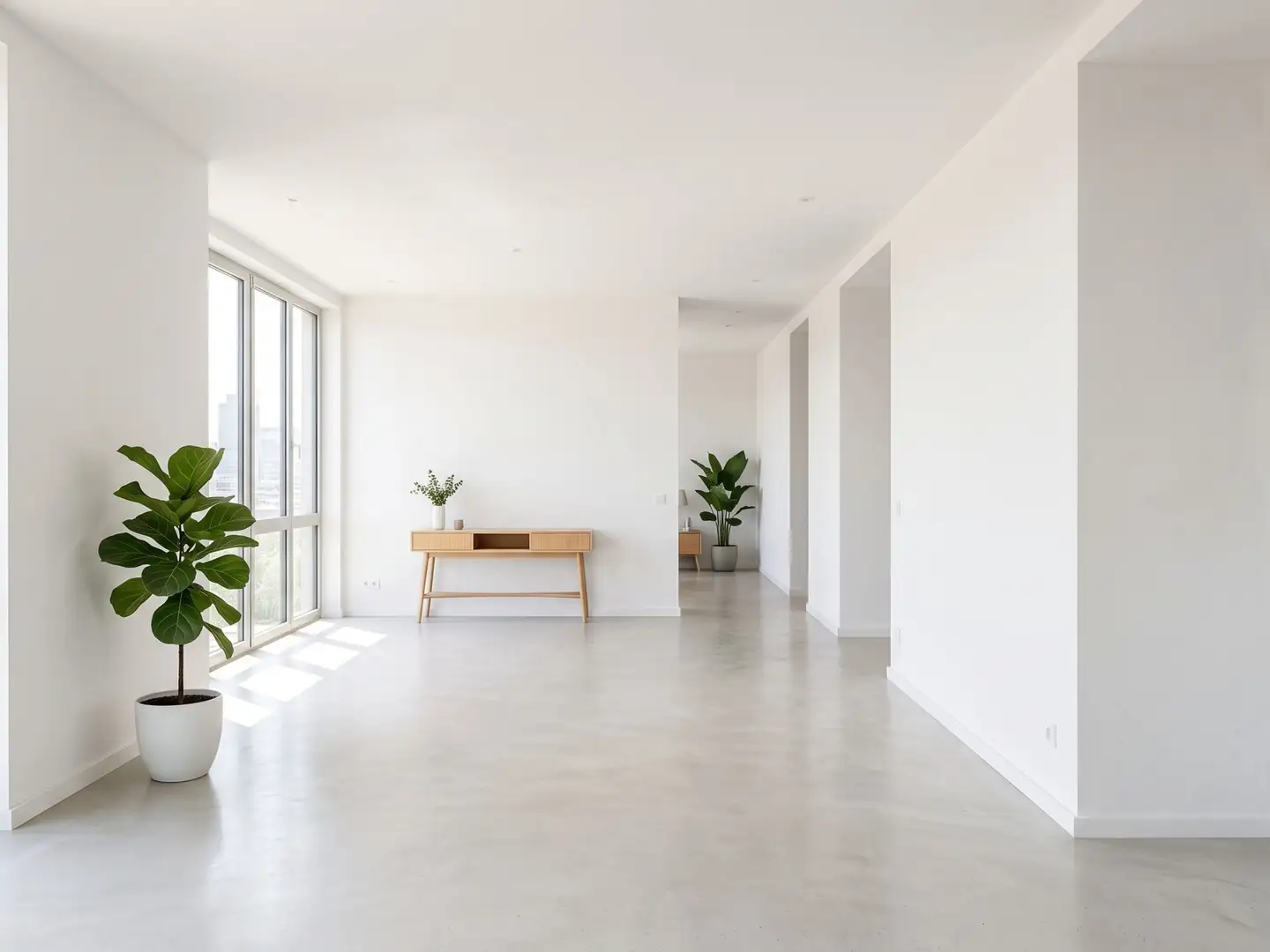
BEFORE / AFTER
What This Service Includes
1. Surface Check & Priming
Level survey, absorbency test and applying the primer matched to the surface.
- Laser-level wall flatness check
- Surface-specific absorbency testing
- Applying absorbency-regulating primer
2. Rails, Beads & Machine Plastering
Laser-set rails and corner beads, mesh reinforcement and base-coat machine application.
- Laser-guided rail and corner-bead installation
- Mesh reinforcement at material junctions
- Pump-sprayed uniform mix
3. Straightedge Cutting & Drying Control
Excess material cut back with the straightedge, trowel-closed surface and moisture tracking.
- Straightedge cutting of excess plaster
- Trowel-closing to a smooth finish
- Moisture-meter drying tracking
RESULTS OF OUR WORK
Process
1. Surface Check
Level survey, absorbency test and primer selection.
Duration: 0.5 day
2. Priming
Absorbency-regulating primer applied to the full surface and left to dry.
Duration: 0.5 day
3. Rails & Beads
Laser rail set-up, corner beads and mesh at junctions.
Duration: 0.5–1 day
4. Plastering
Machine spraying, straightedge cutting and trowel closing.
Duration: 80–120 m²/day
5. Check & Drying
Straightedge and light checks, moisture tracking; sign-off for the satin coat.
Duration: 3–7 days
6. Handover
Moisture reading report and photo handover; sign-off for the next coat.
Duration: 0.5 day
Gypsum plaster is priced per m²; thickness and ceiling work carry separate unit rates.
Get a Project EstimateFrequently Asked Questions
What thickness is gypsum plaster applied at?
Standard is 8–15 mm; areas over 25 mm need layered application or a base fill first. We map thicknesses during rail set-up and write them into the quote.
Can you plaster AAC block directly?
Yes, but never without primer: AAC absorbs water fast and 'burns' the plaster. An absorbency-regulating primer balances the moisture so the coat cures properly.
What causes plaster cracks?
Three main causes: no mesh at material junctions, forced drying (overheating) and plastering weak surfaces without primer. All three are prevented by process discipline — and we back the material we use with a warranty.
Complementary & Recommended Services
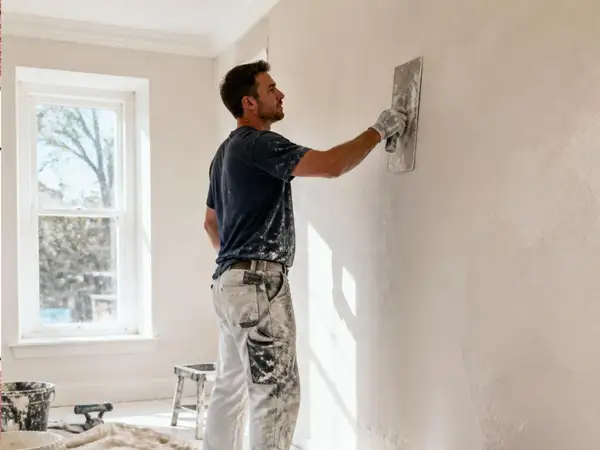
Wall Plastering and Levelling
Base plaster applications that correct wall and ceiling geometry before paint or another finish.
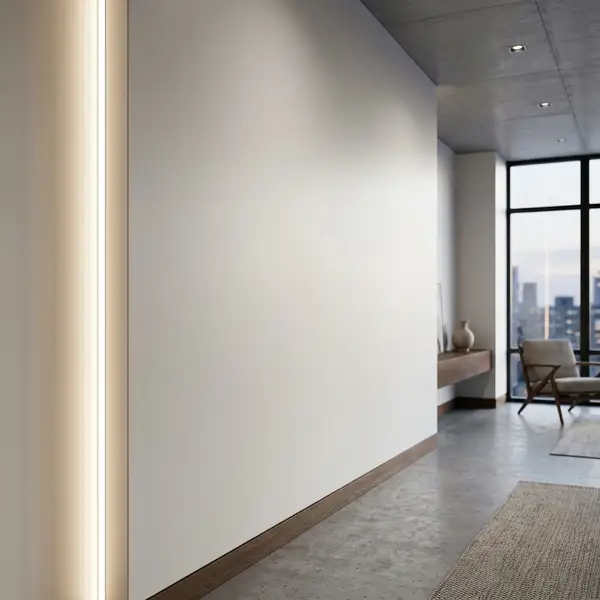
Skim Coat Plastering and Paint Preparation
Most of what people call paint defects are satin defects — the final coat's quality is decided at the burnishing stage.
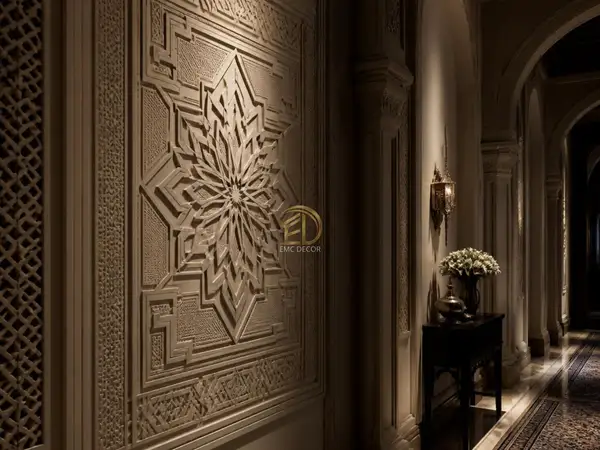
Decorative Plaster and Textured Wall Finishes
Loft or gallery mood, the concrete look gives a wall character — decorative plaster in Istanbul projects gives the space an identity.

Italian Decorative Plaster and Polished Finishes
Italian plaster turns a wall into stone: lime-based material gains marble depth through trowel pressure and mastery.
Let’s Talk About Your Project
Get a free consultation: share the project details in the form or discuss them directly on WhatsApp.